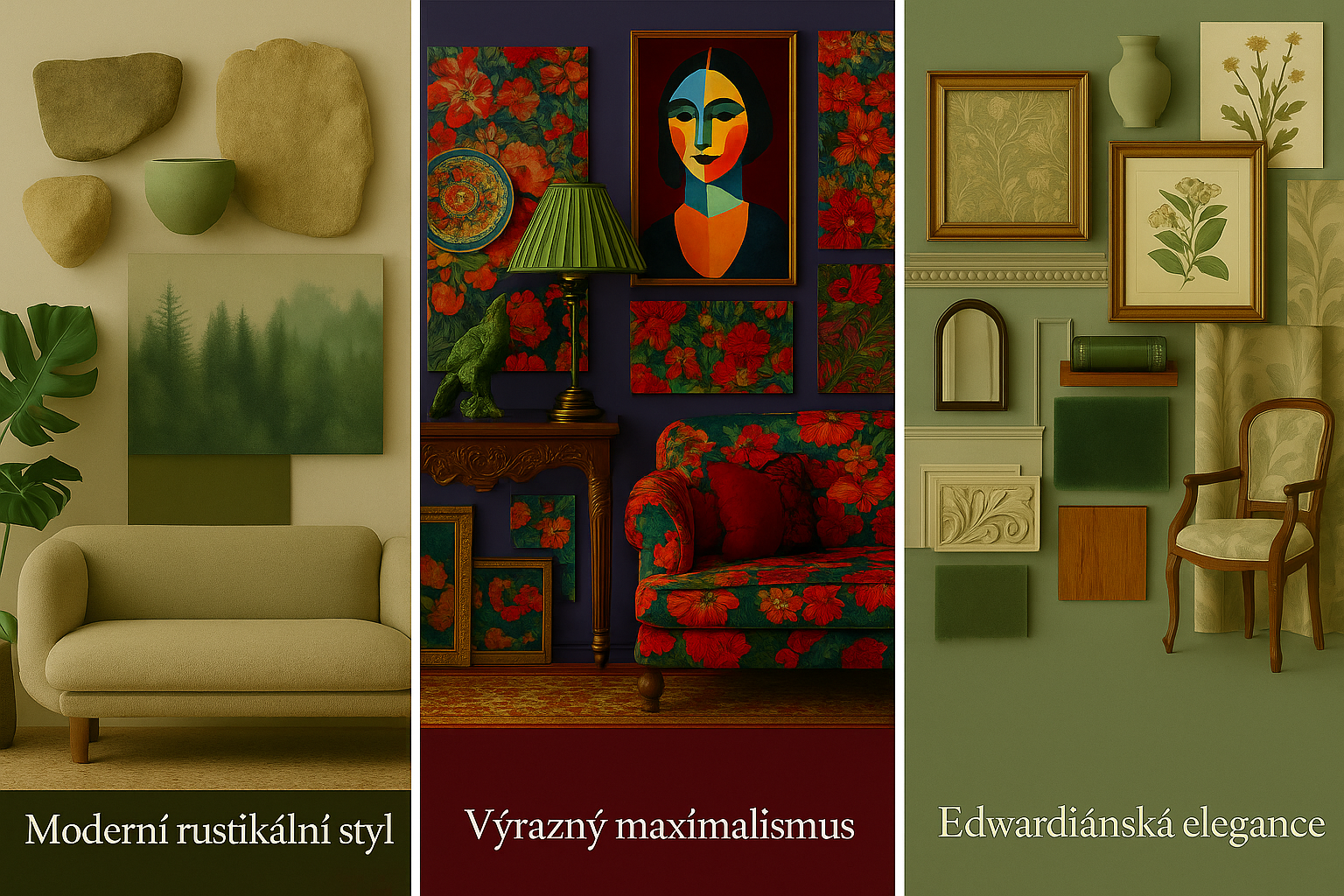
Three faces of interior design in 2026 – the gentleness of Edwardian elegance, the natural calm of modern rustic style, and the boldness of expressive maximalism.
ᴳᴰ Visualisation created using generative AI · Concept and creative direction: Grain of Design
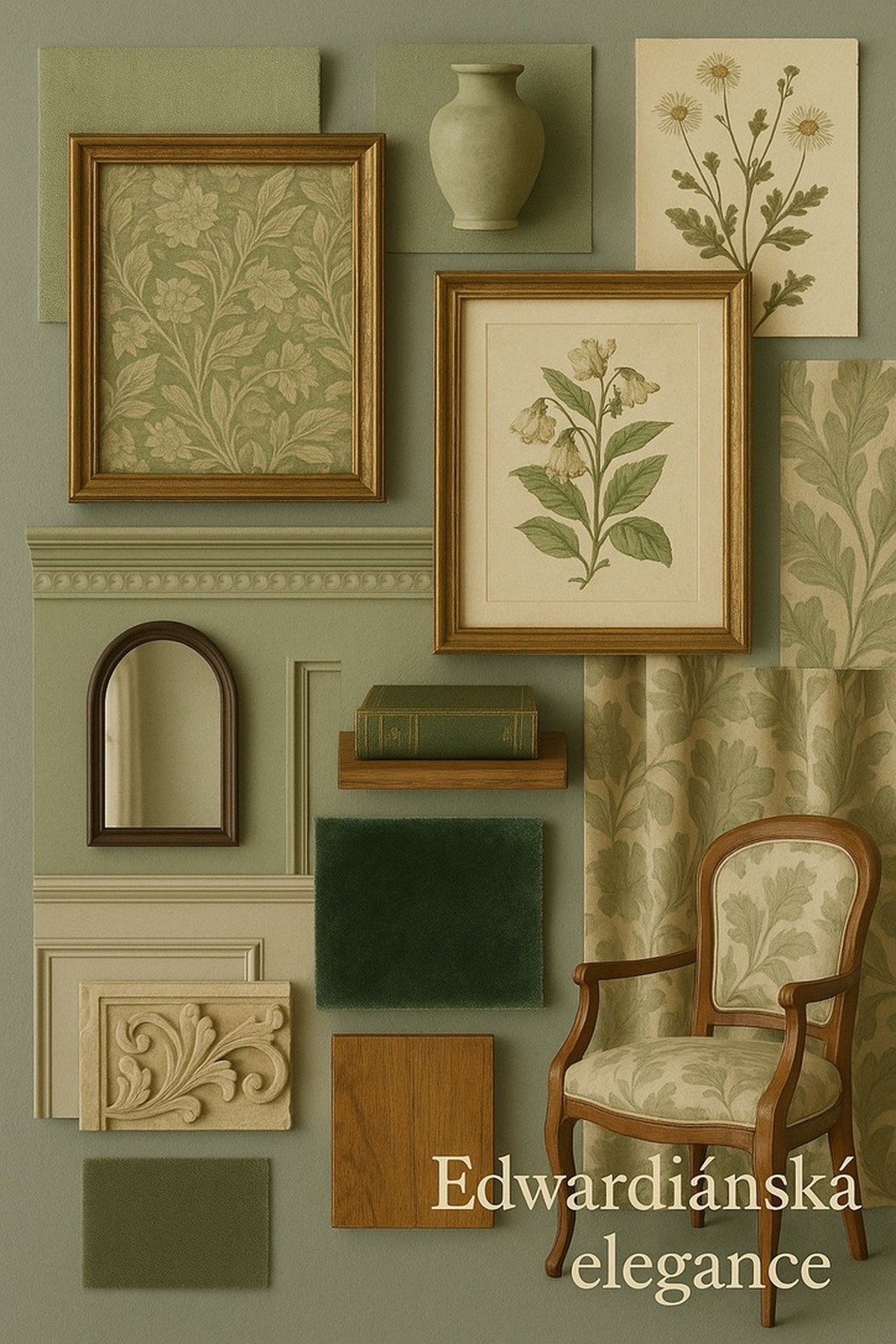
1. Edwardian Elegance: Return of Calm and Craftsmanship
This style brings calm, comfort, and emphasis on craftsmanship to interiors. Characteristic features include high ceilings, light wall colors, botanical patterns on wallpaper, floral art, arched mirrors, and classic moldings. It's not about excessive ornamentation, but a subtle touch of grandeur.
Role of art: Delicate floral studies, vintage-inspired prints, and ornamental patterns with a touch of playfulness work excellently here. Licensed art brings cohesive and curated images to this style, reflecting the gentleness and sophistication of Edwardian interiors. Whether framed on walls or incorporated into textiles, this style excels in coordinated collections.
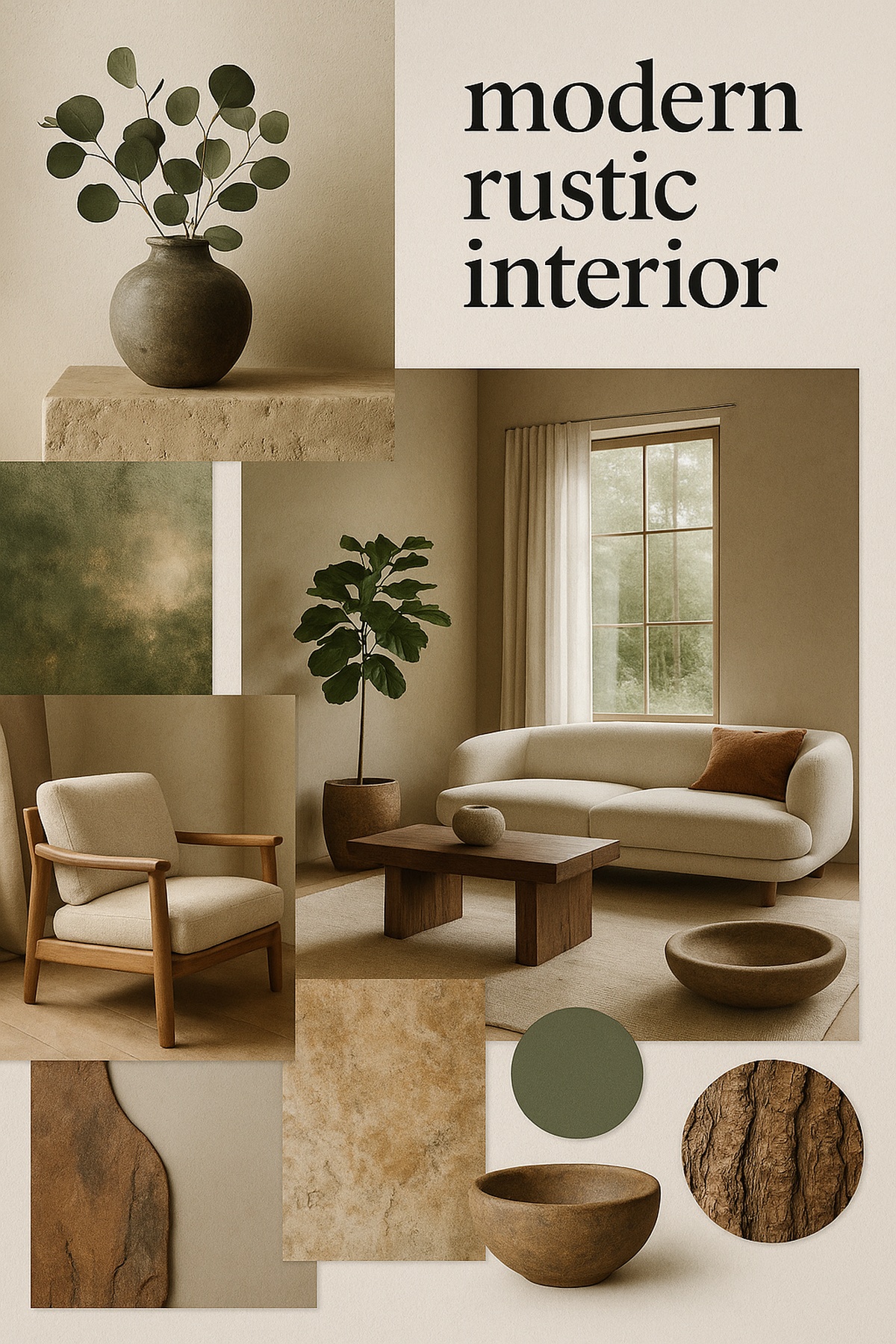
2. Modern Rustic: Art Rooted in Texture and Time
This trend is based on authentic materials. Designers combine handcrafted wood, warm stone, and natural light with elegant surfaces and thoughtful silhouettes. Modern rustic style continues to dominate in kitchens, living rooms, and hospitality spaces across North America and Europe.
Role of art: The right visual materials bring this trend to life. Misty forest landscapes, still lifes with rough ceramics, and abstract compositions inspired by stone, sand, and bark are key. Licensed art brings structure to these stories, allowing product developers to apply visual materials across categories. One visual direction can flow from canvases through table linens to wallpapers, creating cohesion and mood.
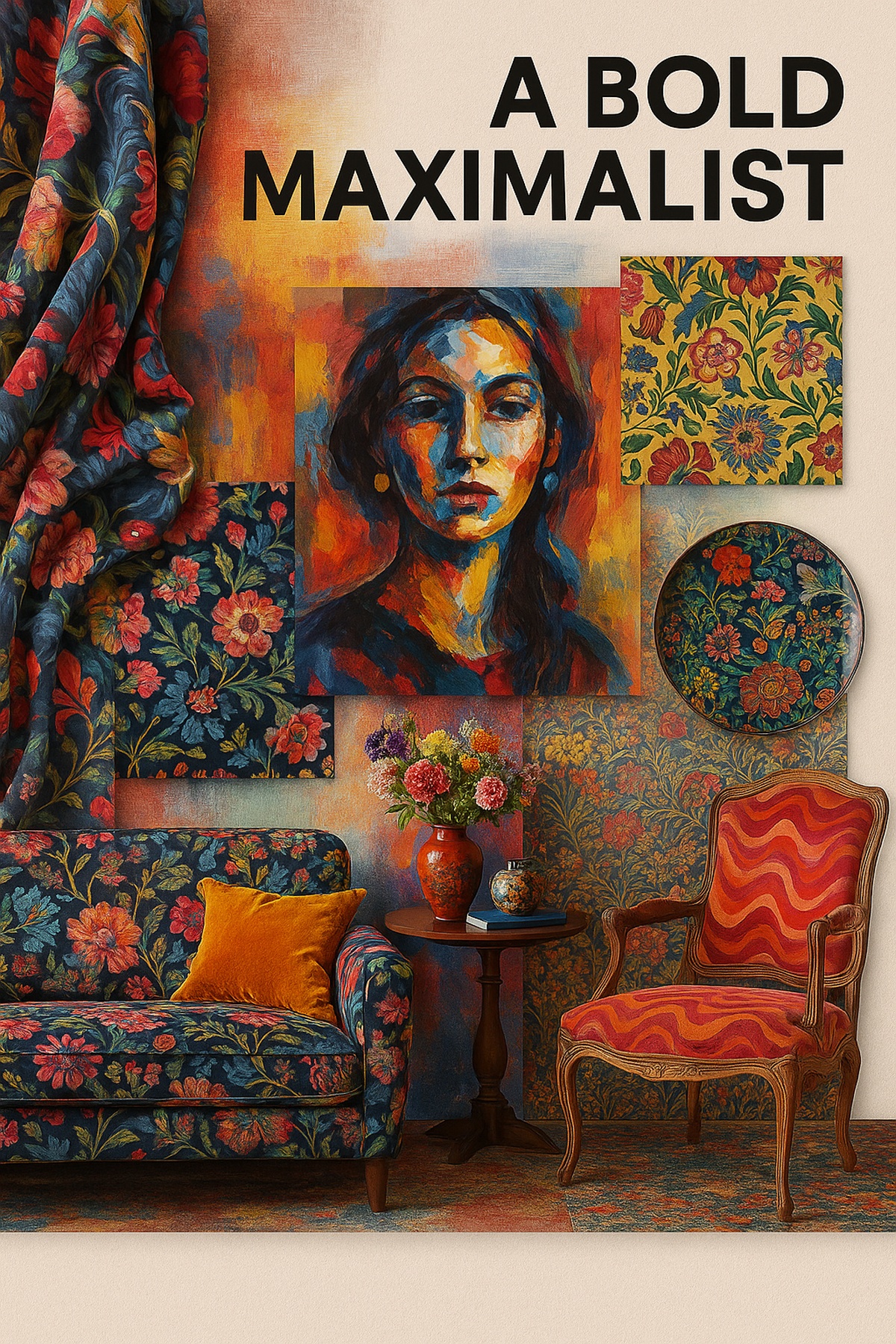
3. Bold Maximalism: Curated Collections with Impact
Say goodbye to white walls and welcome spaces with drama. Bold maximalism is about daring choices that feel intentional. It's not about chaos, but curation. The trend is rooted in expressive colors, patterns on patterns, and layered details that look collected over time.
Role of art: More is more, but it still must be right. Oversized floral motifs, rich painterly textures, figurative abstraction, and intricate repeating patterns are all in play. Licensed art helps creative teams create multi-piece stories that coordinate without appearing too matchy. These collections give customers the tools to layer boldness with elegance.
Conclusion
These three trends show how interior design in 2026 is moving toward personality, texture, and expressive art. Licensed art plays a key role in shaping these styles and bringing cohesion and depth to interiors.