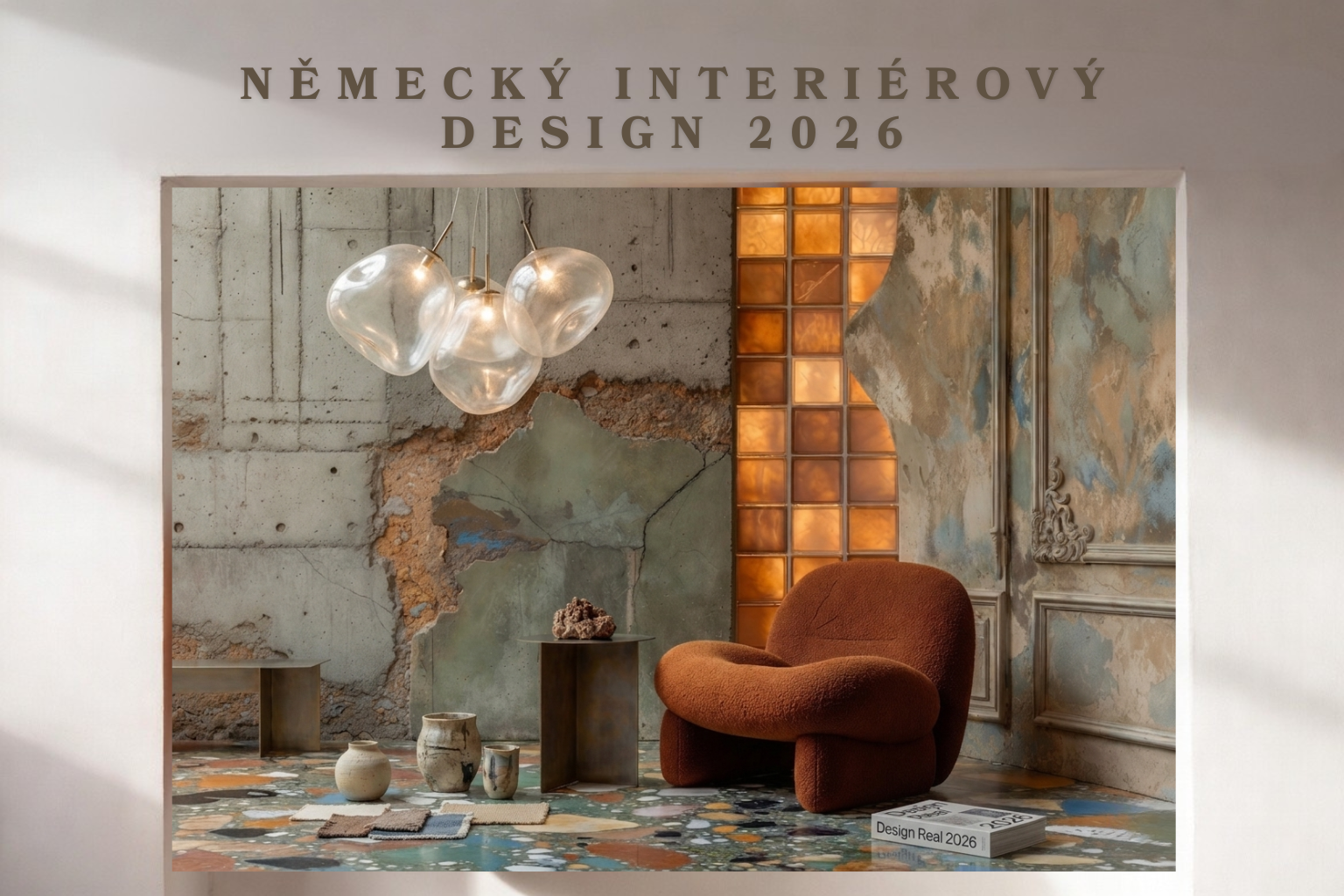
Berlin's design scene in 2026 is a fascinating blend of raw industrial history and hyper-modern technology. While classic German design leaned for decades on the austere functionality of the Bauhaus, today's studios are pushing the boundaries towards the emotional intelligence of space.
In an era of digital overload, the home has become a refuge where technology turns invisible and what takes centre stage is tactility, sustainability and the layering of history.
Trends Defining Contemporary Berlin
- Warm Minimalism & Soft Geometry: Stark white and sharp edges are a thing of the past. Furniture follows the curves of nature and the rigid architecture of lofts is softened by tactile textures — bouclé, unfinished stone and the patina of ceramics.
- Quiet Technology & Tech-Wellness: Air-quality sensors and circadian lighting are hidden inside furniture. The home is a hybrid for work and recovery, with wellness zones that slide out of panelled walls.
- Sustainability as Design Reality: Luxury in 2026 is defined by traceability. Materials include mycelium-based products and recycled construction rubble transformed into luxury terrazzo.
- The Berlin Layering: Designers do not paper over historical layers but let them collide. Prussian classicism, socialist panel buildings and the techno clubs of the nineties create a tension called curatorial imperfection.
Four Studios Rewriting the Rules
Let us look at progressive creators who know that the human body was not made to live at right angles — and who are not afraid to place a hand-sewn silk sofa next to a raw concrete column.
1. Studio Bosko: "We design for life when no one is watching."
Kasia Kronberger and her team create homes that are not staged but deeply personal. Their masterwork is the renovation of a rooftop apartment in Kreuzberg (170 m²). What was once a dark loft was transformed into a radiant family home where experimental timber craftsmanship meets views onto the industrial masonry of a historic courtyard.
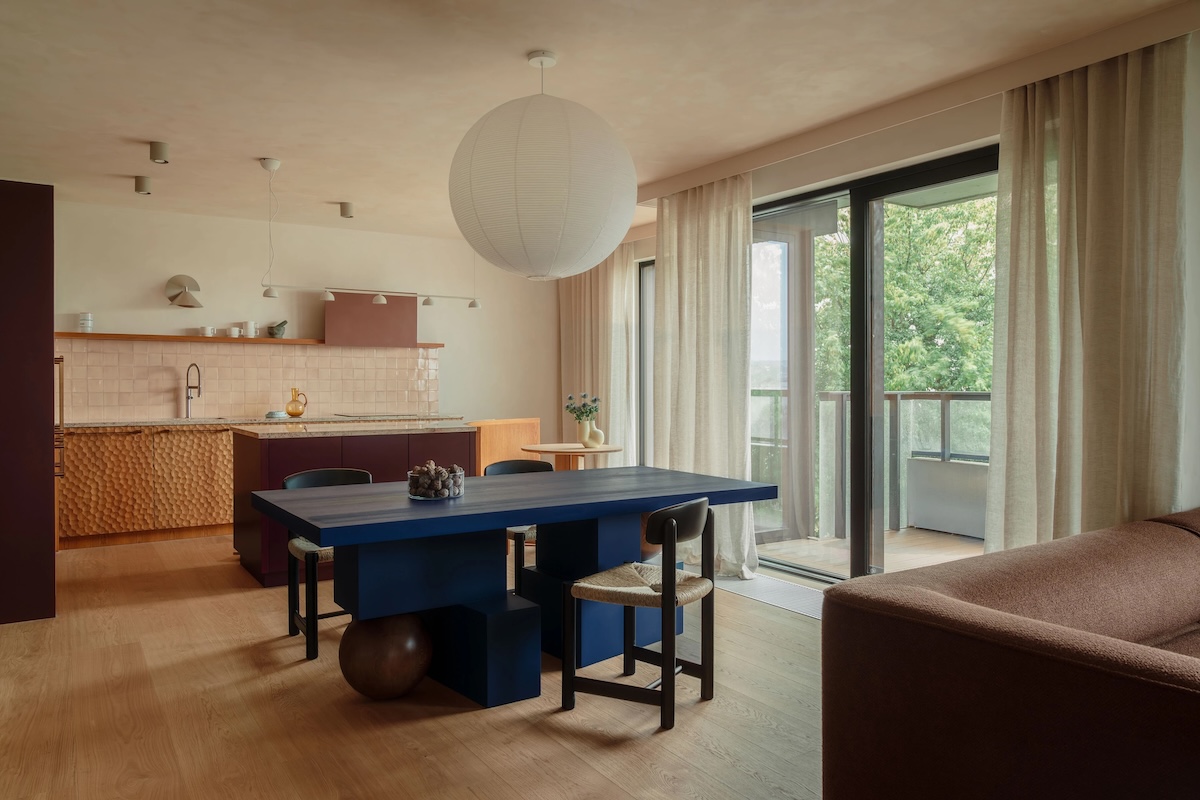
Studio Bosko interior with a blue table, timber, glazed tiles and soft curtains.
2. Gisbert Pöppler: "Harmonious hybrids of unexpected elegance."
Pöppler is a master of refinement. His residence at the very heart of old Berlin is a laboratory of emotional functionalism. He can fish an old conductor's chair out of a skip or source a display table from a former department store and elevate both to the status of high design. His work innovates solutions that balance tradition with radical modernity.
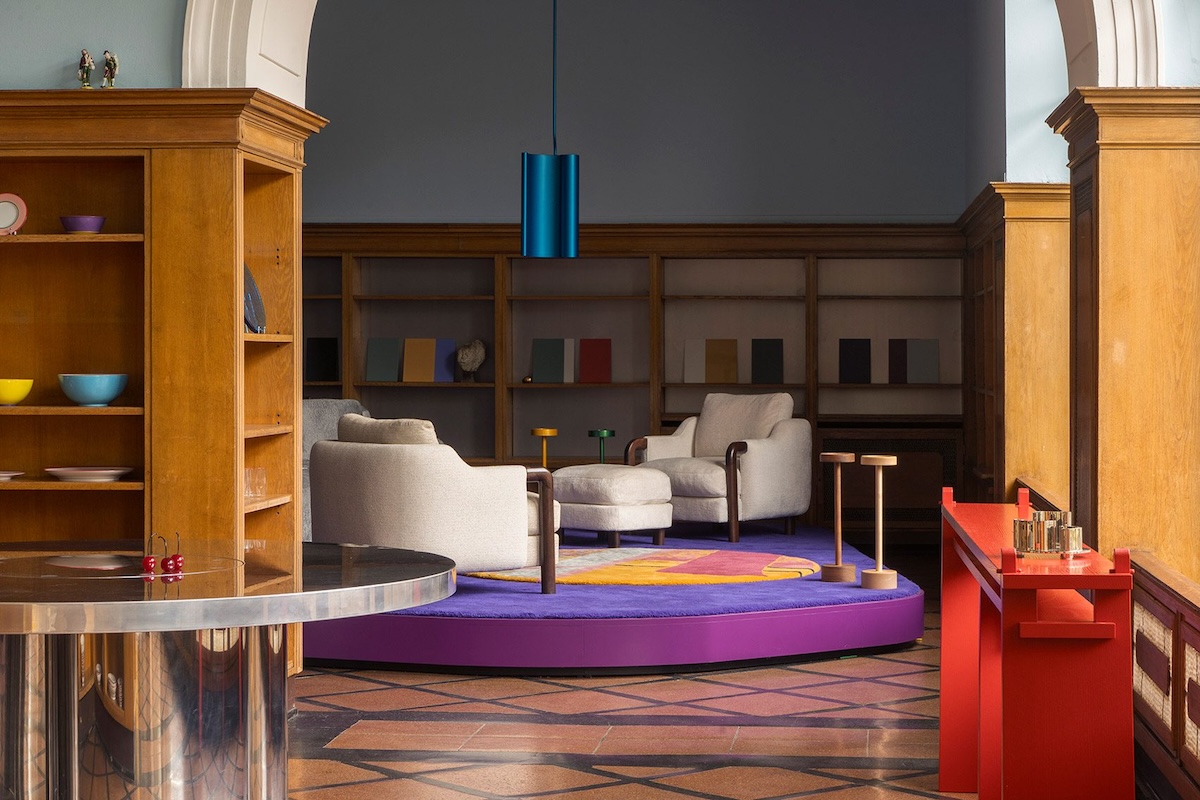
Gisbert Pöppler interior with timber cladding, colourful accents and a circular platform.
3. Studio Loft Kolasiński: "The victory of quality over quantity."
This Polish studio with a strong Berlin influence bets on its own authored furniture and vintage scouting. Projects such as the apartment in Kamień Pomorski (2025) walk the edge: steel elements and Bauhaus-inspired armchairs inserted into a historic building. They create a tension you will never experience in a brand-new flat.
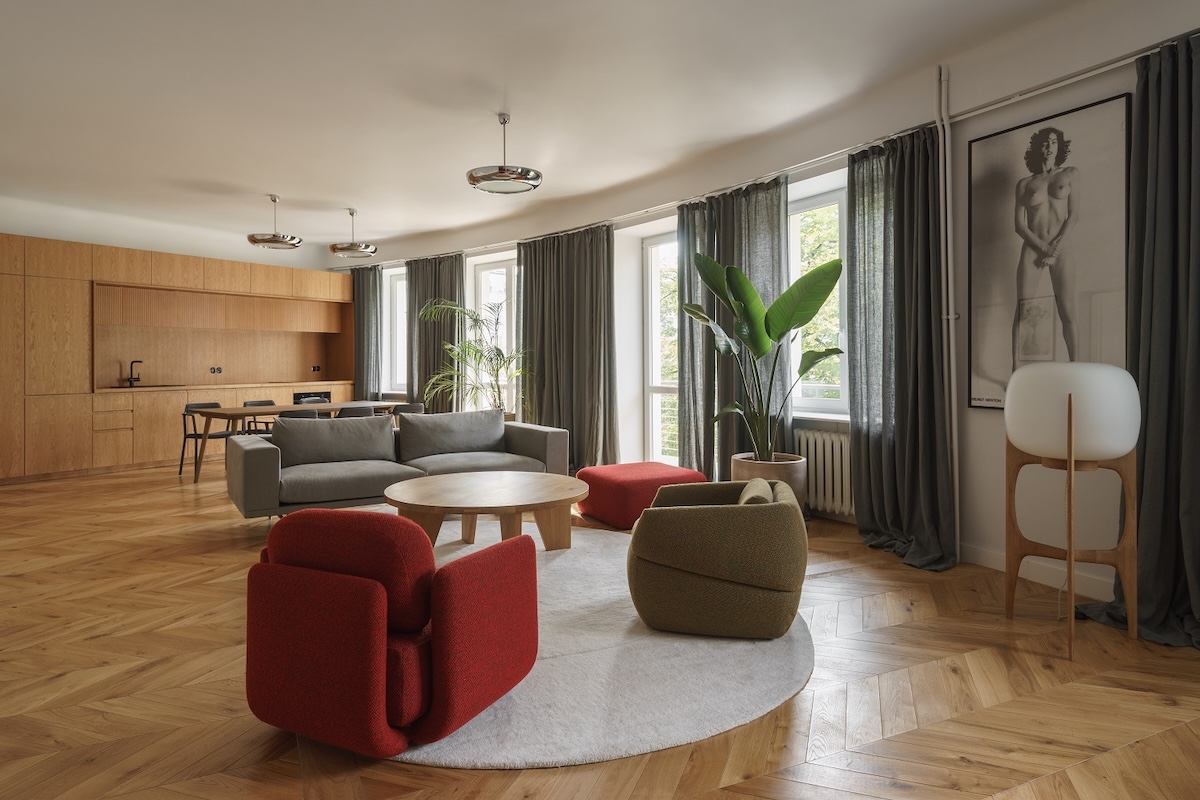
Studio Loft Kolasiński interior with parquet, oak furniture and vintage centrepieces.
4. Studio Karhard: "The aestheticisation of imperfection as an act of both reason and passion."
The creators of the legendary Berghain's interior transfer the club's DNA into residences and offices. Their Moonfare GmbH project and the B32 apartment in Kreuzberg — with its arched glass-brick wall — define Berlin luxury for 2026: fewer ornaments, more experience.
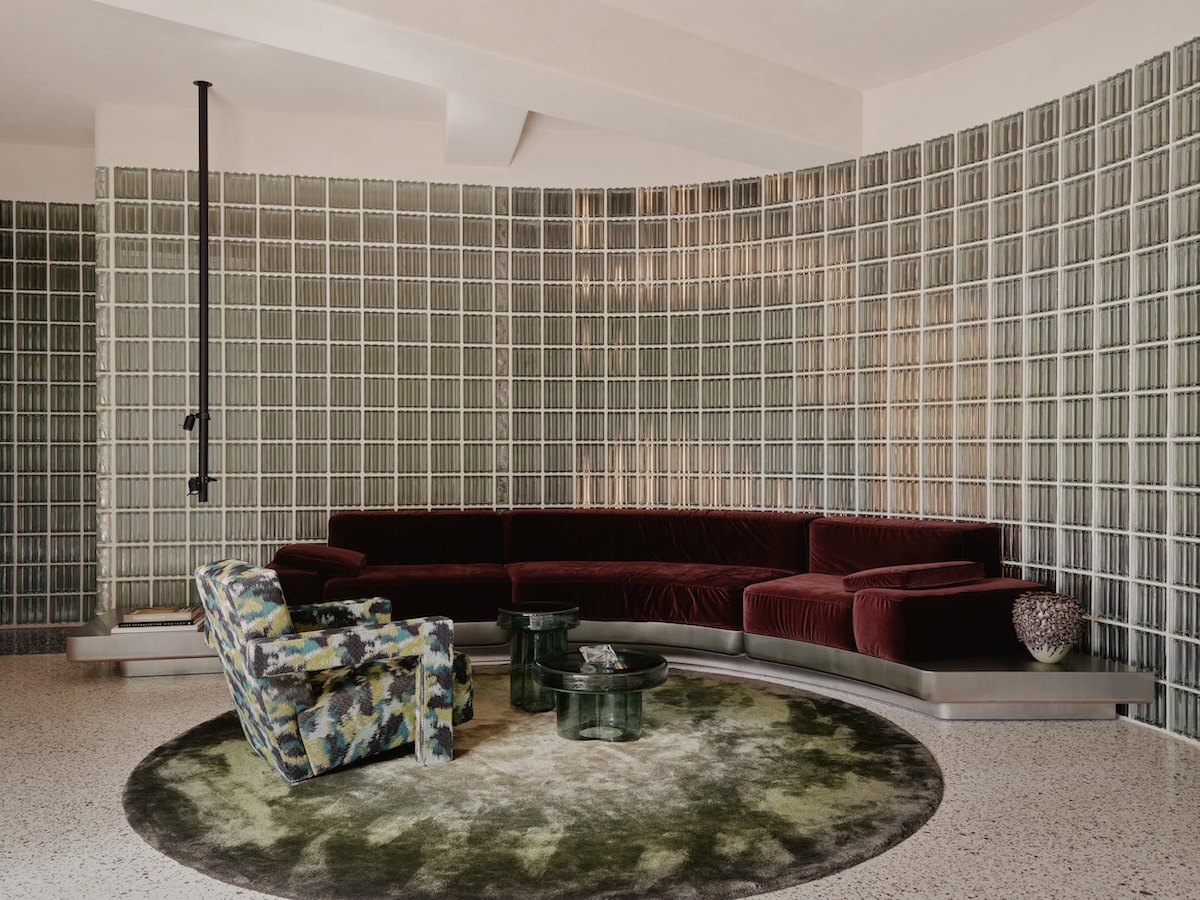
Studio Karhard interior for Berghain with glass blocks and a wine-red modular sofa.
Inspiration for Czech Design: What to Take Away?
Our German neighbours show us that pure functionality is no longer enough to create a sense of safety. The trend is moving towards a maximalism of colour, local craft and the designer as maker-craftsman rather than a catalogue buyer. Vintage pieces are not a nostalgic add-on — they are a tool for creating the patina that gives new spaces a soul.
Berlin design in 2026 is not for everyone. It is for those who are not afraid to offend history a little in order to create something new and authentic. It is punk in luxury form.
What about you? Will you dare to break the rules and bet on curatorial imperfection? Or does the right angle still rule in your interior?
Write to us via the Grain of Design contact form.