We live in a world bursting at the seams. We're permanently overwhelmed – by visual smog, information, performance demands. Trends change faster than seasons, and we're collectively tired of beauty that screams for attention.
And that's precisely why today's greatest luxury is called calm. Not style. Calm.
Design in 2024 and beyond no longer climbs upward toward more ostentatious gestures. It descends into depth. It stops being just decoration and becomes psychology, therapy, and at best – medicine for civilization. Welcome to the era where the greatest wealth isn't a gold faucet, but the possibility to mentally decompress at home and be yourself.
More Than a Backdrop: Home as an Active Family Member
For a long time, we perceived interiors as passive backgrounds to our lives. As a stage where everyday drama unfolds. The new approach – neuroaesthetics and neuro-design – turns this view upside down.
Research from Europe and Japan confirms what we somehow feel in our bones: space has a direct biological impact on our bodies. It affects cortisol levels (stress hormone), heart rhythm, and ability to concentrate.
The interior isn't dead matter. It's an active household member that either constantly irritates us gently or comforts us.
If the outside world is a battlefield for our attention, home must be a bunker where the nervous system can reset.
Space Choreography: The End of "Living Room"
This shift requires discarding the old real estate vocabulary. We stop designing rooms only by function and start designing them by emotions. The interior becomes a map of moods, a set of microclimates.
Forget "living room," "dining room," and "bedroom." Try thinking about zones instead:
- Zone of calm and mental reset – a place where time stops.
- Zone of stimulation and energy – where ideas and lively conversation flow.
- Zone of intimacy and safety – our personal cocoon.
- Zone of nostalgia – space for anchoring and memories.
Progressive studios today don't talk about style, but about dramaturgy or choreography of space. What rhythm does the apartment have? Where does it slow down? Where should accents come? It's like a musical composition – you need alternation of silence and energy, fast tempo and adagio. Movement through the interior should be a story, not just a transfer from point A to point B.
What Silence Looks Like: Practical Manifestations of New Luxury
In practice, this change unfolds as a retreat from everything that is "loud." Less polished marble, ostentatious gold, and aggressive statement pieces that dominated Instagram. Instead, elements return that soothe the senses and give the body a signal of safety.
1) Return of "Blind Spots"
Spaces deliberately not designed for social media emerge. We're rediscovering the magic of alcoves, cocoon corners, semi-darkness, and intimate nooks. Places where you can hide from the world – and sometimes from yourself.
2) Light as Liquid, Silence as Material
Light is worked with differently than before. It's not about illuminating everything. It's about shadow, soft transitions, about light that flows through space like water – not like a spotlight in interrogation.
And silence? It becomes a design material. Acoustic comfort, noise-absorbing textiles, cork or moss walls... the new quality standard isn't the "wow effect," but peace of mind.
3) Haptic Empathy
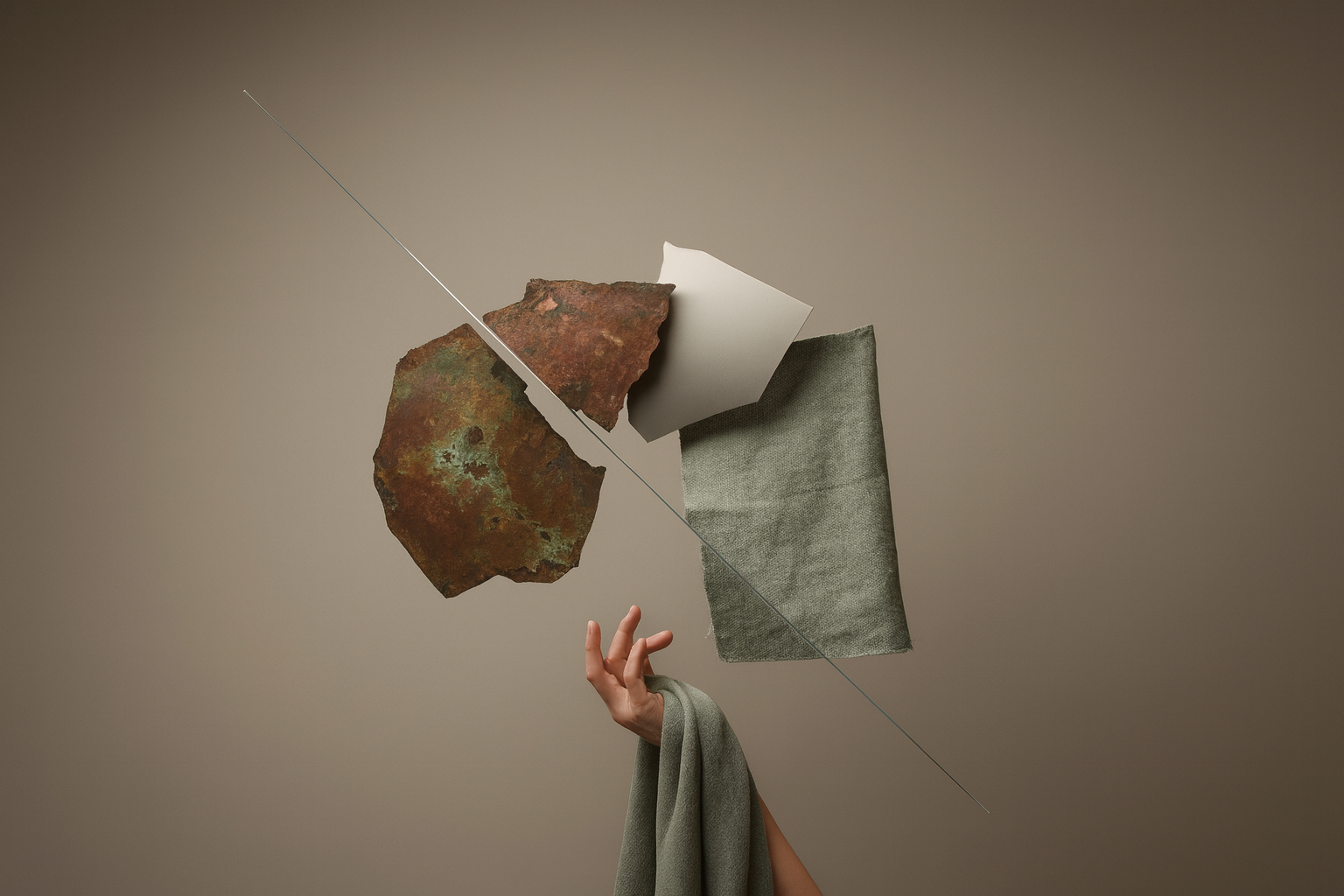
When eyes are tired, touch takes over. We begin to love materials that have memory. Sanded wood, stone with patina, textured plaster, textiles that age with us. We touch surfaces that ground us.
Three Pillars of the New Wave of Design
If we were to summarize this philosophy in three points, it would look like this:
- Spatial Calm
Less furniture, more air. Soft boundaries, layered light. Space that allows the nervous system to breathe. - Haptic Empathy
Emphasis on texture and micro-surfaces. Designing for touch, not just for the eye. - Quiet Luxury Mindset
Luxury is no longer about status visible at first glance. It's a non-monetary aesthetic – a feeling of deep safety and comfort that resonates quietly.
Quiet luxury isn't a style. It's a nervous system in safety.
Conclusion: Space as an Ally
December is usually the month of returning home – to apartments, to bodies, to ourselves. The ideal time to reassess what we actually want from our space.
Let's stop thinking about how the interior looks for visitors, and start thinking more about how we feel in it when we're alone and tired after a long day.
Let's seek a home that functions as an ally, not as another task on the list.
As aptly said in design circles today:
"We live tired of beauty. We seek space that returns our pulse to normal."
And that's exactly the task of interiors for the coming years.
For people to finally return to their bodies. Home.
A Few Quiet Answers in Conclusion
What is quiet luxury in interiors? +
Quiet luxury isn't about ostentation, but about calm, safety, and sensory comfort.
How does neuro-design affect our psyche? +
Space sends signals to the body. Light, sound, and texture can soothe stress and stabilize pulse.
What helps most with calm at home? +
Lower visual noise, layered soft light, acoustic comfort, and haptic natural materials.
Why are ostentatious statement interiors disappearing? +
Because after years of overload, we seek home as regeneration, not as a show.