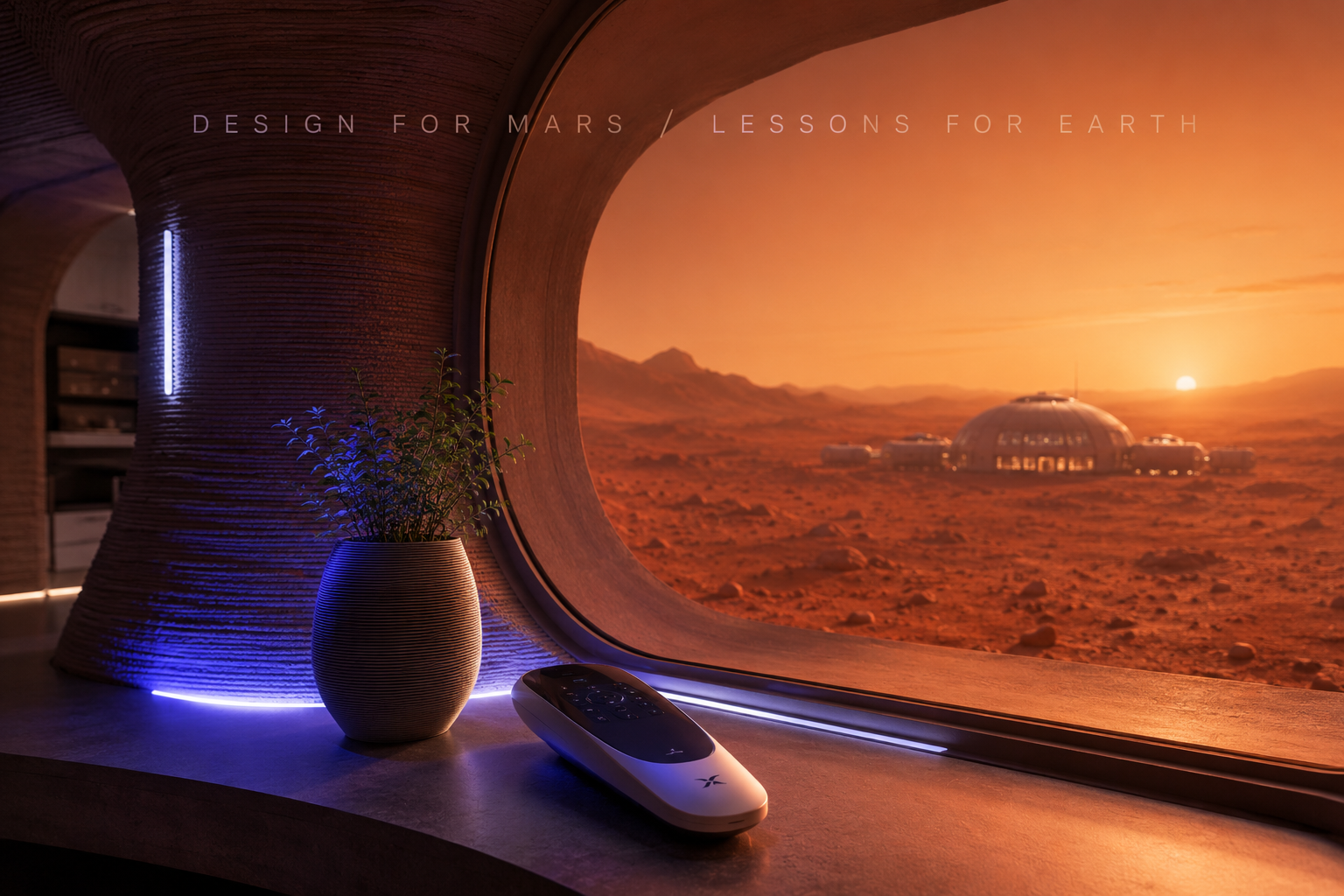
The future of living is not only born at drawing boards in glass-fronted studios. It is being tested several hundred kilometres above our heads and in simulated bases in the middle of deserts.
Cosmic design is not a sci-fi fantasy for a privileged few — it is the most demanding design discipline in the world. In a place where every extra gram costs millions and every mistake can be fatal, a new understanding of what the word home really means is being born.
These extreme conditions hold up a mirror to us. They show us how little it takes to live well when space is cleverly designed.
The Space Station: A Choreography of Life in a Box
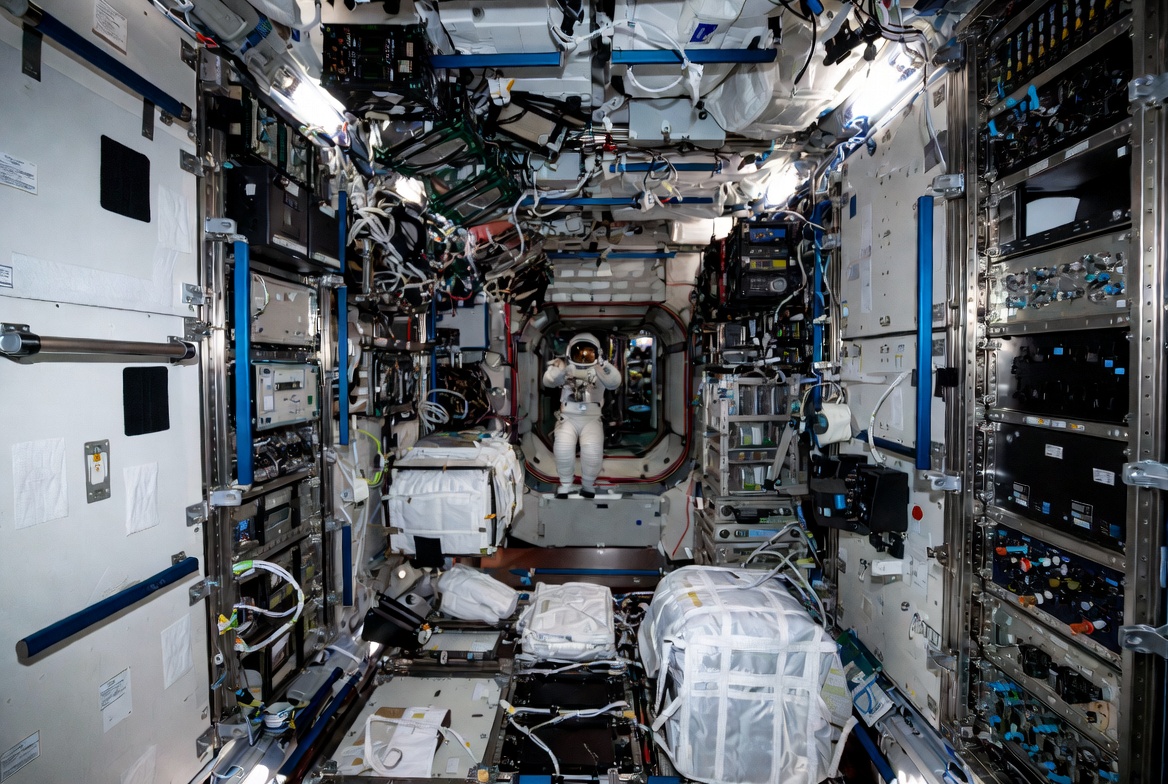
Interior of an International Space Station module – a demonstration of extreme functionality where every centimetre serves a purpose.
Imagine your apartment has neither floor nor ceiling. The International Space Station (ISS) is essentially an endless corridor where "up" and "down" are determined only by where you happen to stick a label.
It is the most expensive studio apartment in human history, where every centimetre of wall is used as storage, a laboratory or technical infrastructure.
Astronauts live in what might be called ergonomic totality. Everything must be within arm's reach, everything must have its place — otherwise it floats away. Designers here tackle details that most of us on Earth never think about: how to design a dining table you cannot sit at, or how to provide privacy in a cabin the size of a phone booth.
Lesson for Earth: The ISS teaches us to work with volume, not just surface area. We measure our flats in square metres, but in space everything is counted in cubic metres. Even a small apartment can feel spacious if you use vertical space and strip away visual noise.
Mars: Architecture as a Spare Pair of Lungs
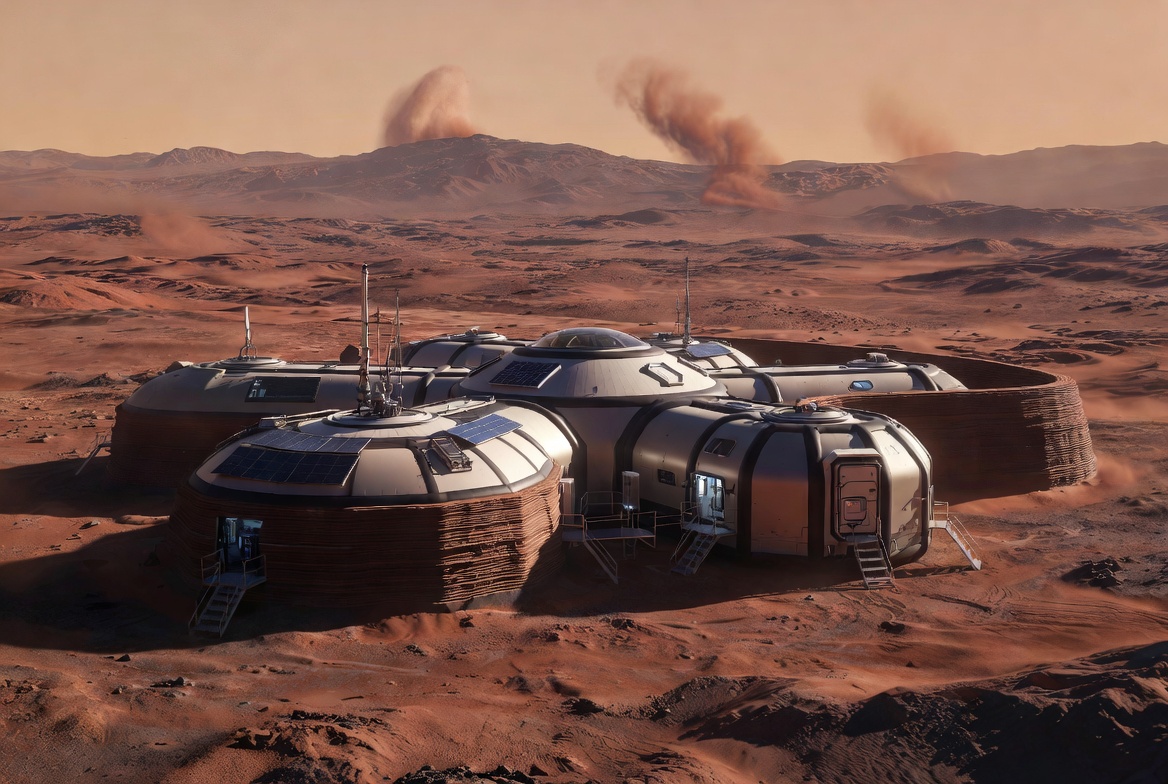
Martian habitat – architecture of survival on the red planet.
On Mars, design ends where the engineering of survival begins. Outside you face radiation, dust finer than powder and frost that would freeze your breath. The habitat becomes a second skin for the human body.
We already know that we will not be shipping bricks from Earth. Future Martian homes will be "printed" from local dust — regolith — or quite literally grown. Scientists are experimenting with mycelium, a fungal network that, combined with Martian soil, can form a structure stronger than concrete.
Why should this matter to us? Because Mars is the ultimate lesson in circular economy. In the closed system of a habitat, nothing is thrown away. The water you exhale today will be tomorrow's coffee. This closed-loop principle is precisely what we are trying to introduce in ecological construction on Earth, so that we stop depleting resources.
SpaceX: When Hi-Tech Meets Pure Emotion
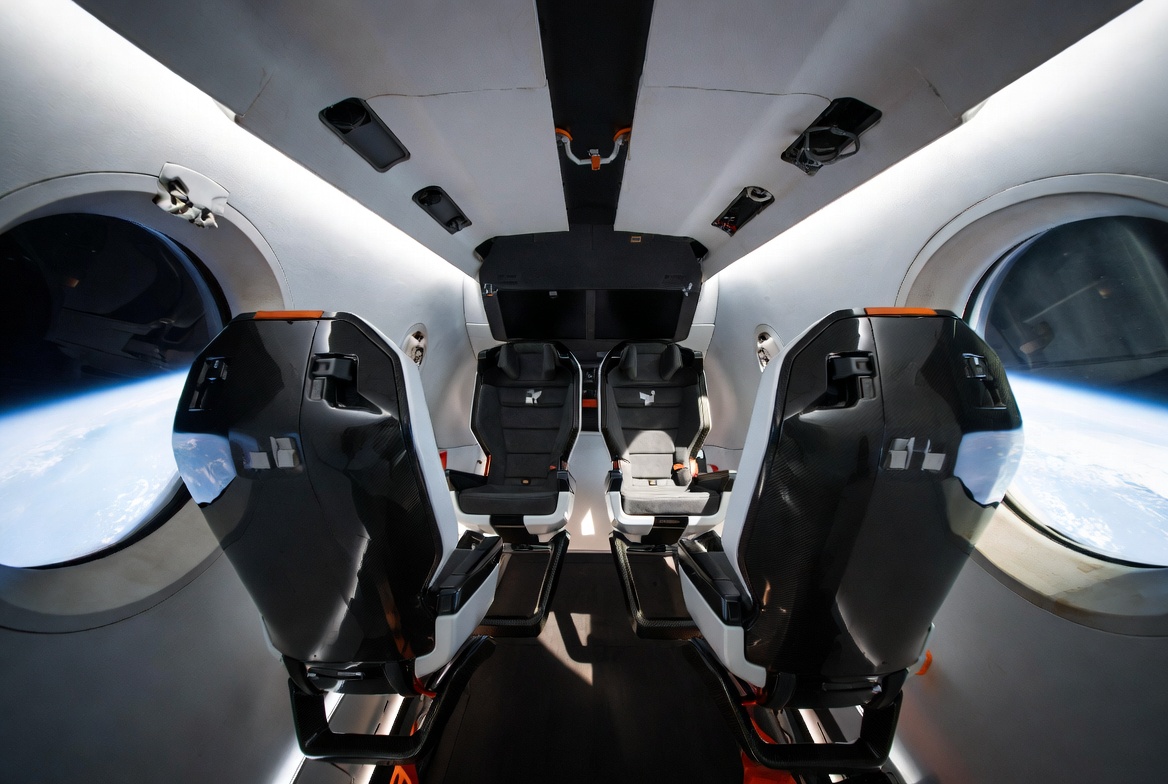
Interior of the SpaceX Crew Dragon – an example of surgical cleanliness and technical elegance.
For a long time, space interiors were expected to look like the inside of an old calculator — full of wires, levers and grey plastic. Then Elon Musk and SpaceX arrived.
The interior of the Crew Dragon looks more like a Tesla or a luxury yacht club. Instead of thousands of switches, there are touch screens. Instead of heavy seats, lightweight carbon shells upholstered in Alcantara.
This material is not merely luxurious to the touch. It is a triumph of function. It is flame-retardant, extremely light and durable.
SpaceX shows us that technology does not have to be frightening or complicated. Good design should put the user at ease. In an environment where you face enormous stress during a flight, visual clarity is a therapeutic tool.
This digital minimalism is already beginning to influence the interiors of modern offices and smart homes.
What Will We Encounter More Often on Earth in the Future?
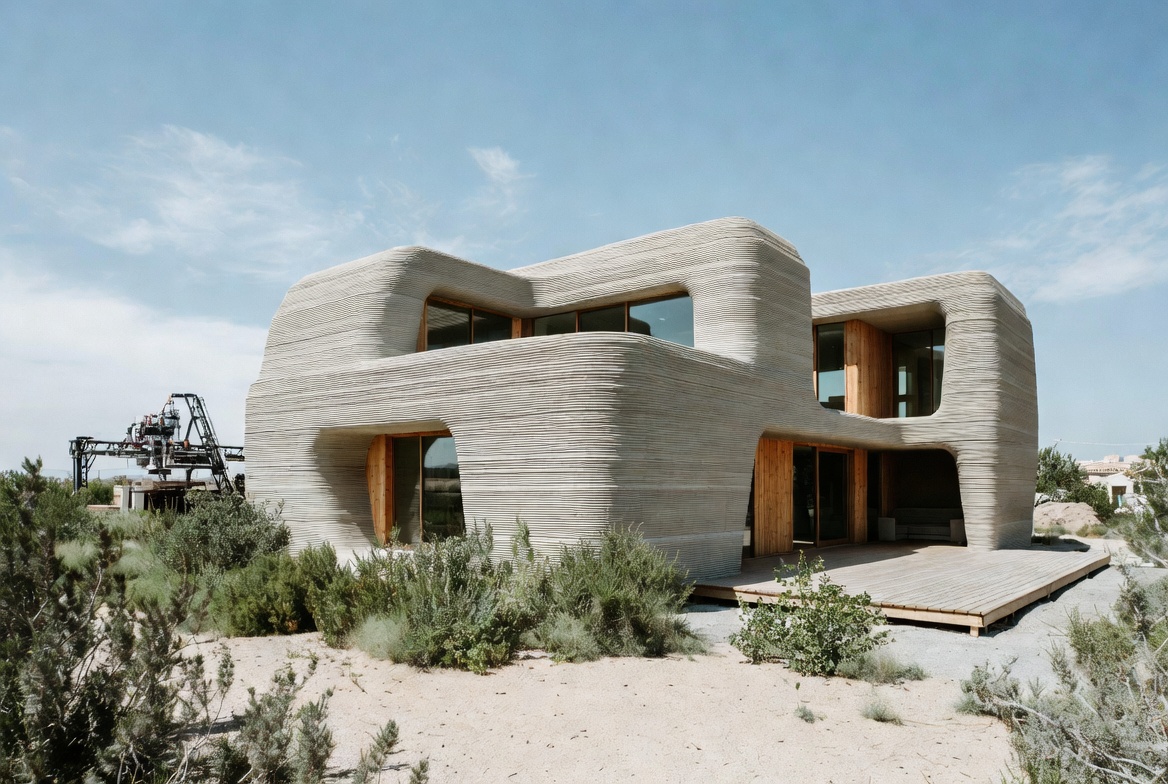
3D-printed house on Earth – technology originally developed for Mars is already being used for fast and sustainable construction.
Space research is an incubator from which technologies fall directly into our living rooms. What awaits us?
-
3D-printed buildings
The company ICON is already building homes that look as if they belong on another planet — but stand in Texas. They are completed in a matter of days, have organic shapes and a minimal carbon footprint. -
Biotextiles and fungi
Mycelium is becoming the hit of sustainable design. You can use it to make furniture, insulation or even packaging that you simply toss on the compost heap after use. -
Circadian lighting
The ISS has no natural day or night — the sun rises there every 90 minutes. That is why systems are being developed there to simulate the colour and intensity of sunlight so the body knows when to sleep. These bulbs are already available for your home to improve your sleep. -
Aerogels
A material as light as air that insulates better than anything else. Originally designed for spacesuits, now used in extremely energy-efficient buildings.
Conclusion: What Do the Stars Teach Us About Home?
Cosmic design is not about fleeing Earth for a red wasteland. Paradoxically, it is a journey back to the essentials.
It teaches us that home is not just a pile of things, but a safe haven that must be in balance with its surroundings. It compels us to ask: do we truly need all the objects we surround ourselves with? And could our homes be living organisms rather than dead shells?
The next time you look up at the night sky, do not only think about rockets. Think about the fact that up there, right now, the way all of us will live in twenty years' time is being tested.
Two Questions to Reflect On
- If you had to design your home according to the principles of cosmic design — where every object must have a function and space is used to the maximum — what would be the first thing you would throw out?
- Can you imagine living in a house that is 90% recycled and printed by a robot, or does a traditional brick still give you a greater sense of security?