
Most clients arrive with a picture: "I like this sofa, these colors, this style."
But rarely does anyone ask: "What kind of silence will be here?" or "How will I breathe in this space?"
Acoustics and air quality are two of the most important, yet least visible elements of an interior. They don't show up in photos. They're hard to capture on a moodboard. But our nervous system recognizes them within minutes.
In this Monthly Signal, we'll explore why in 2026 we should start designing not only what we see, but also what we hear and breathe.
1. Silence Isn't Emptiness: What Acoustics Does to Us
Silence in an interior doesn't mean the absence of sound, but the absence of unwanted and disturbing sound. Modern minimalist interiors with large, hard surfaces (glass, concrete, tile) paradoxically cause acoustic stress.
Sound reflects, creating reverberation and echo, which leads to fatigue, speech unintelligibility, and increased blood pressure.
Why is this a problem:
- Hard surfaces, echo: They cause long reverberation. Spaces where reverberation time exceeds 0.5 seconds feel "tiring," noisy, and unpleasant for extended stays (often offices and modern kitchens combined with living rooms).
- Impact noise and hallway noise: Typically a problem in older apartment buildings and new constructions with thin partitions. Here design collides with building acoustics, but this can be partially addressed.
- How to recognize a "tired" space just by sound: In such a space, we often unconsciously raise our voices during conversation to overcome our own reverberation.
Subtle Interventions – "Soft Architecture":
- The key is introducing elements that absorb sound rather than reflect it.
- Textiles and segmentation: Heavy curtains, carpets (even smaller, strategically placed ones), upholstered furniture, and cushions.
- Bookshelves: Books and random objects on shelves excellently break up sound waves, functioning as natural diffusers.
- Acoustic surfaces: Integrated wall cladding and ceiling panels made of mineral fibers or perforated drywall. Today available in elegant designs that work as decorative elements (e.g., slats with acoustic backing).
2. Air as an Invisible Material
Air quality is measurable but invisible – yet it dramatically affects our cognitive performance and mood.
Air quality, CO₂, stuffiness:
The number one problem in modern, sealed buildings is the accumulation of carbon dioxide (CO₂). Already at concentrations above 1000 ppm (parts per million), there's a decrease in concentration, fatigue, and headaches.
Why interiors give us headaches after an hour:
- High CO₂: It's not stuffiness caused by temperature, but dullness caused by lack of fresh air and CO₂ accumulation.
- VOCs (Volatile Organic Compounds): Emissions from cheap furniture, adhesives, paints, and textiles. Some interiors "smell new," but in reality they're releasing toxic substances that irritate the respiratory tract.
How a designer can work with this:
- Material ethics: Emphasis on furniture and building materials with low-VOC certification (low VOC content, e.g., Greenguard or Blue Angel certificates).
- Ventilation regime (Controlled ventilation): Alert the client to the need for regular air exchange. In new buildings, propose integrated heat recovery systems that minimize heat loss but ensure constant fresh air supply.
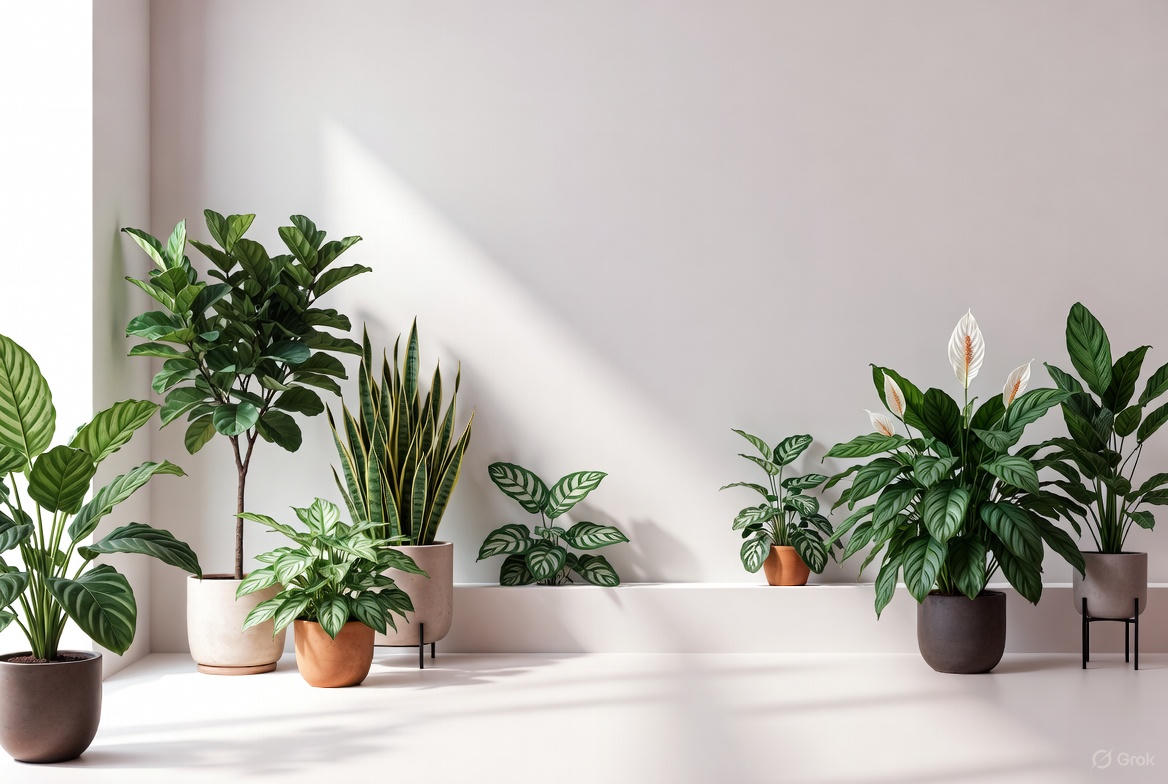
- Greenery: Larger, healthy plants (e.g., Sansevieria or Ficus) help filter VOCs and regulate humidity, while also serving as an aesthetic element of biophilic design.
- Furniture placement: Ensure free air movement (e.g., don't place furniture directly against walls near air supply/exhaust vents).
3. How to "Listen to" and "Breathe in" a Space
A designer should now be equipped with a set of simple diagnostic tools.
Listening:
- Clapping in the room: A strong, sharp hand clap in an empty room is a simple reverberation time test. If you hear a sharp "ping" with a long tail, the acoustics are poor. Ideally, it's a more muted, quick "plop" sound.
- Perceiving neighbor noise: Sit by the noisiest wall and listen to noise (impact noise, barking, voices). This reveals the biggest weakness.
Breathing (Air Quality):
- Feeling heavy-headed / drowsy: After 10–15 minutes, focus on your own body. If you feel slight disorientation, fatigue, or the need to yawn, it's time to measure.
- Measuring CO₂: Getting a simple and affordable CO₂ meter is as important for a 2026 designer as a laser measure. Values should ideally not exceed 800 ppm.
4. Small Interventions, Big Relief
Solutions don't always have to be expensive and complicated. Often, strategic placement of absorptive surfaces is enough.
Specific examples:
- Heavier curtain in one zone: Double, heavy fabric curtains on a large glass surface absorb both reverberation and exterior noise.
- Textile headboard / panel behind the sofa: Upholstery on a key wall behind the head or seating area significantly limits sound wave reflections.
- Small rug just under the coffee table: You don't need to cover the entire room. Even a strategic piece of carpet, placed between the main sound source (speaking mouth) and hard reflective surface (tile), shortens reverberation.
- Natural ventilation vs. "we ventilate only when it's bad": Creating a "chimney effect" – opening a window low on one side and high on the other side of the apartment for a few minutes (so-called shock ventilation) is more effective than leaving ventilation slightly open all day.
The point: This isn't a "luxury addition," but basic space hygiene. Improving acoustics and air has a direct impact on health, sleep, concentration, and well-being, which are today's biggest trends in residential design.
5. Conclusion – Silence and Air as the New Standard
A well-designed apartment doesn't make noise – it whispers. Design can no longer just be photographed, it must be listened to and breathed.
Acoustics and air quality are invisible elements that clients subconsciously perceive. The designer of the future is a curator of the senses.
"Air is the first furniture we feel."
"The quietest material in the room? Sometimes it's carpet, sometimes a thick brick wall."
Challenge to the reader: On your next visit to a café, showroom, or new apartment, try closing your eyes for a minute. Notice how the space actually sounds and how you breathe in it after 15 minutes. It can radically change your approach to design.
Green Tips
While plants alone cannot replace proper ventilation (they don't address CO₂ accumulation), they are excellent at removing Volatile Organic Compounds (VOCs) released from paints, varnishes, cleaning products, and new furniture (e.g., formaldehyde, benzene).
Among the most effective and aesthetically pleasing "air purifiers" are:
- Snake Plant (Sansevieria trifasciata): Extremely low-maintenance and effective filter. Particularly interesting because it releases oxygen at night, making it ideal for bedrooms.
- Peace Lily (Spathiphyllum): Elegant plant with white flowers, excellent at removing a wide range of toxins including formaldehyde, benzene, and trichloroethylene. It also helps maintain optimal air humidity.
- Ficus (Ficus Benjamina or Ficus elastica – Rubber Plant): Besides acting as a striking decorative element, it's very effective at filtering formaldehyde and benzene. Larger specimens logically have greater filtering capacity.
- Spider Plant (Chlorophytum comosum): One of the easiest plants to grow. Known for rapid and effective removal of formaldehyde from the air.
Tip for the designer: Recommend that the client place plants near sources of toxins (e.g., near freshly painted walls) and choose larger, healthy specimens, as filtering power increases with leaf surface area.
Author: Grain of Design