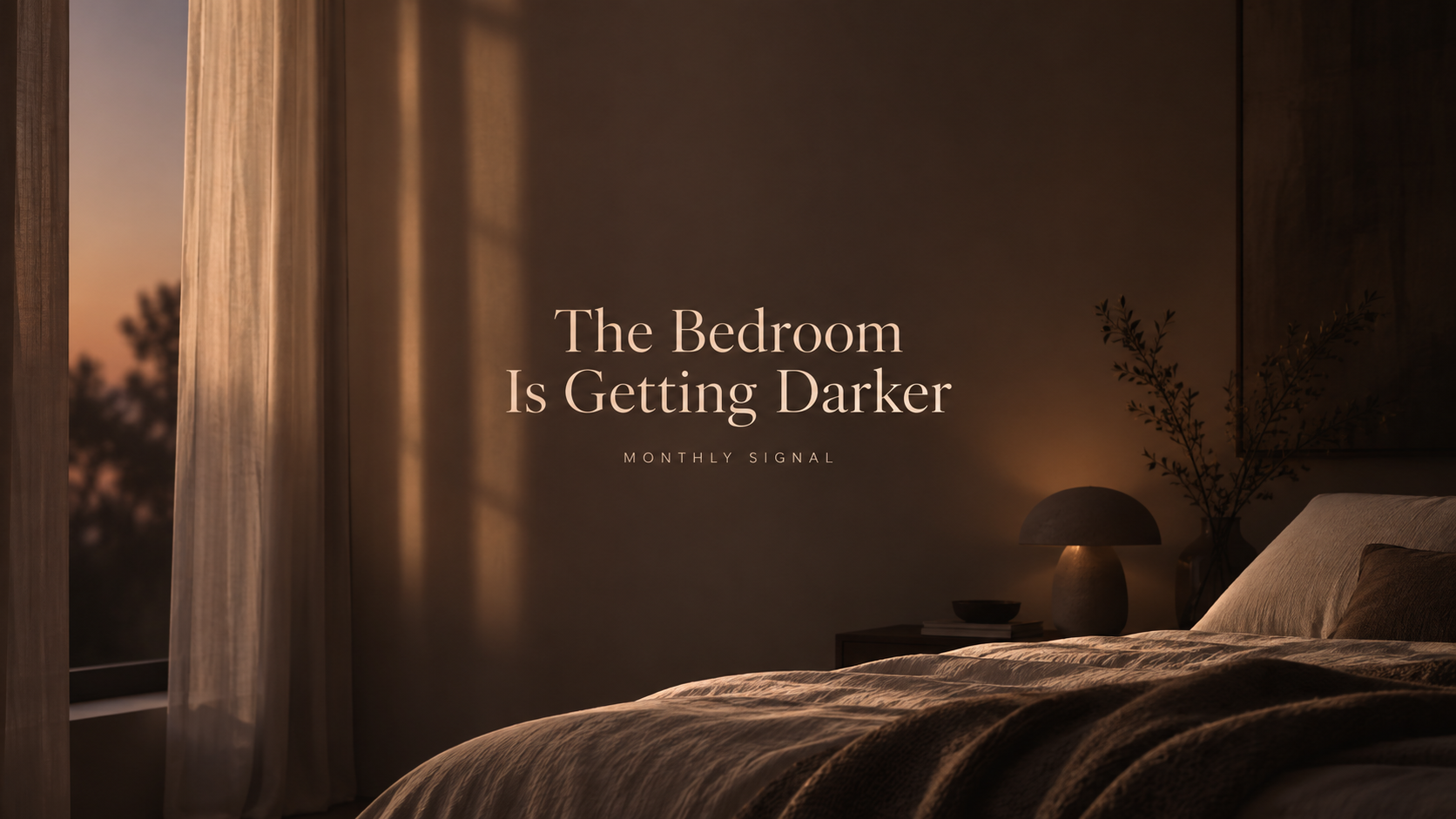
For a long time, we designed bedrooms according to how they look during the day. We wanted them to feel bright, airy and clean even at ten in the morning.
But the bedroom's most important work does not begin in full daylight.
It begins when the day grows quiet and we need to switch off.
If a space is truly meant to support rest and recovery, it makes sense to consider it from the perspective of evening and night as well. Recommendations for a sleep-supportive environment keep returning to the same trio: darkness, quiet and a pleasantly cooler setting. Light is also one of the strongest cues for our circadian rhythm, which is why it matters to gradually reduce its intensity in the evening and create the darkest possible environment during sleep.
This is where deeper, darker shades begin to become interesting.
Not because a dark brown wall would improve sleep by itself. But because it can change the atmosphere of a space. It can suppress contrasts, give the room depth and create a calmer, more intimate refuge in the evening.
A dark colour in the bedroom does not have to mean gloom.
It can be an architecture of shadow.
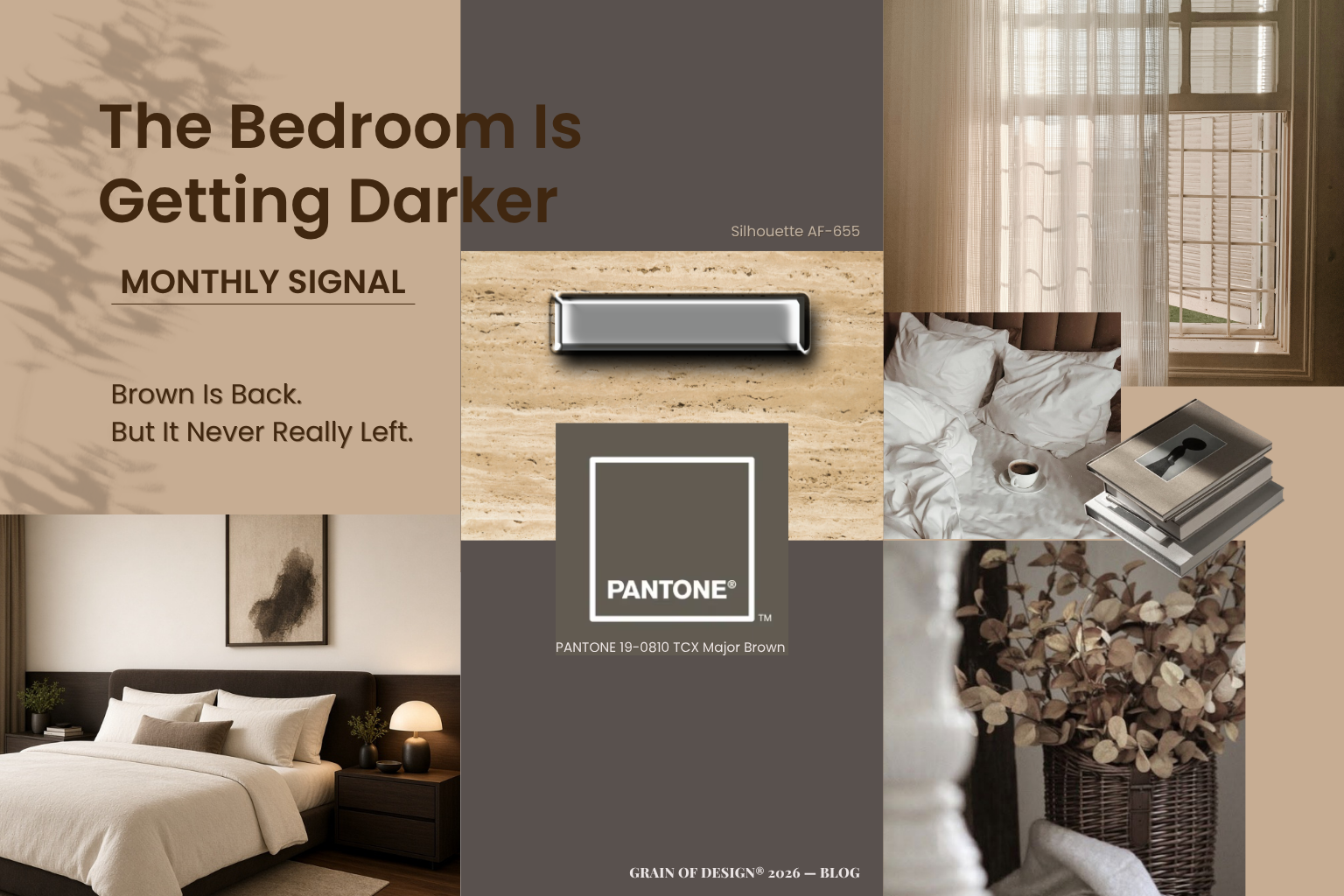
ᴳᴰ Moodboard by Grain of Design
How to Compose This Kind of Bedroom
1. Walls: Working with Depth
A dark shade does not automatically need to be applied to all four walls. A deep espresso or cocoa shade can work beautifully on the wall behind the headboard, or on two adjoining walls, while the rest of the room remains a soft warm white — for example PANTONE 11-4201 Cloud Dancer.
Cloud Dancer is an interesting counterpoint to deep brown. Pantone describes it as an airy white that can create contrast with other colours; one of the official 2026 palettes is even called Light & Shadow.
Using a darker shade across the entire room can work especially well where we consciously want to create a more intimate, enveloping atmosphere. Room size is not the only criterion — window orientation, the amount of natural light, ceiling height, surfaces and, of course, the desired character of the space also matter.
One rule is important:
There is no need to repeat the dark colour everywhere.
If we have a deep brown wall, we do not also need a brown bed, rug, curtains and bedding. A dark plane can create the shadow. Other materials can bring light into it.
2. Textiles: Layer, Do Not Weigh Down
Textiles in the bedroom have both an aesthetic and a practical role. Their weight, weave and ability to work with heat affect not only how the bed looks, but also how comfortable it feels.
- Bed frame and headboard: oatmeal, natural linen or soft greige.
- Bedding: Cloud Dancer, warm white to ivory.
- Throw: textured wool in camel or taupe.
- Accent: one deeper colour detail — muted olive, tobacco or burgundy.
Linen, cotton and wool also bring something a smooth colour surface cannot: texture. Light breaks across them differently in the morning, afternoon and evening, and texture helps soften the contrast between light textiles and a dark wall.
3. Shading: Two Layers, Two Different Jobs
Window treatment in a bedroom is both a technical and a visual element. Two layers work best, with each one solving a different problem.
At the window there can be a blackout blind or blackout Roman blind in a neutral shade. Its job is not decoration, but limiting outside light as effectively as possible during the night.
From ceiling to floor, a flowing curtain in natural flax, mushroom or a very light taupe can soften the room.
During the day, the blackout remains open and the light textile diffuses daylight. At night, the roles reverse: the blackout creates darkness and the curtain remains a soft visual layer of the interior. Blackout shading is also one of the commonly recommended ways to reduce external light in a sleep environment.
Light neutral textiles have another advantage — design longevity. If, in a few years, we decide to replace the chocolate wall with olive, sand or a light neutral, the curtains, bed and rug do not need to change with it.
4. Evening Light: Less Matters More Than More
Perhaps the most important light in a bedroom is not the light we turn on.
It is the light we turn off.
Instead of one strong ceiling source, it makes sense to work with several low-positioned, low-intensity lights in the evening — a bedside lamp, indirect light or a gentle orientation light.
Before sleep, the amount of light should gradually decrease. Expert recommendations for healthy adults point to very low evening light exposure and an environment as close to complete darkness as possible during sleep.
This is not about creating an “orange bedroom”. It is mainly about less light, less glare and fewer visual stimuli.
Palette
Base / Shadow: Major Brown
Soft Light: PANTONE 11-4201 Cloud Dancer
Natural Layers: Natural Flax · Taupe · Camel
Optional Accent: Muted Olive · Tobacco · Burgundy
A bedroom does not need to feel like a sunlit gallery at ten in the morning.
It needs to work in the evening and at night, when we ask it for the most important thing:
to help us slow down, switch off and leave the day behind the door.